
Today, I made another batch of homemade miso.
I’ve been making miso for about seven years now. A friend in my neighborhood first showed me how, and it has become one of my favorite annual traditions.
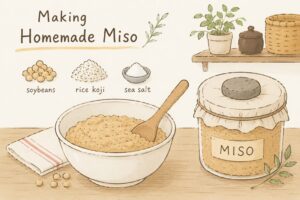
One of the things I love most about homemade miso is its simplicity. You only need three ingredients:
- Soybeans
- Rice koji
- Natural sea salt
That’s all.
Although the process takes time, it’s not difficult. The longest step is cooking the soybeans until they become soft enough to mash easily.
My Homemade Miso Process
1. Soak the Soybeans
I begin by soaking the soybeans in plenty of water for at least eight hours.
Every year I’m surprised by how much they expand after absorbing the water.
2. Cook Until Tender
Next, I cook the soybeans until they are very soft.
I use a pressure cooker, which makes the job much easier. Once full pressure is reached, I lower the heat and cook them for about 25 minutes.
3. Prepare the Koji Mixture
While the soybeans are cooking, I combine the rice koji and sea salt in a separate bowl.
4. Mash and Mix
After draining the soybeans, I mash them while they’re still warm.
A food processor makes this step quick and easy.
Then I gradually mix the mashed soybeans with the koji and salt until everything is well combined.
5. Prepare the Container
Before filling the container, I sanitize it with alcohol and lightly sprinkle salt on the bottom.
6. Pack the Miso
I shape the mixture into small balls and press each one firmly into the container to remove as much trapped air as possible.
Once it’s completely filled, I smooth the surface, sprinkle another thin layer of salt, cover it tightly with plastic wrap, and place a small weight on top.
7. Let Time Work Its Magic
The container is stored in a cool, dark place where it can ferment naturally.
After about six months, the miso develops its rich aroma and deep flavor.
Some people gently stir the miso halfway through the fermentation process to encourage even fermentation.
It’s also normal for a little mold to appear on the surface. If it looks and smells normal, simply removing that portion is usually enough.
Why I Keep Making My Own Miso
Most of the miso I use at home is homemade.
I’ve thought about making larger batches, but my pressure cooker isn’t very big, so this amount is just right for me.
The flavor is wonderful, and I enjoy knowing exactly what’s in it.
No preservatives, no unnecessary additives—just simple ingredients, time, and nature.
The Quiet Power of Fermentation
Fermentation has become increasingly popular in Japan in recent years.
Traditional foods like miso, soy sauce, and pickled vegetables all depend on countless invisible microorganisms working together.
I’ve often read that a healthy gut supports not only physical health but also mental well-being. Our digestive system contains beneficial bacteria, harmful bacteria, and many other microbes that live in a delicate balance.
As I prepared this year’s miso, I found myself appreciating these tiny unseen helpers.
It may sound a little idealistic, but I like to think that healthier people create kinder communities. And perhaps small traditions like making homemade miso remind us to slow down, care for ourselves, and appreciate the natural world around us.
Maybe that’s one small step toward making the world a better place.
That’s what I was thinking while preparing this year’s batch of miso.